
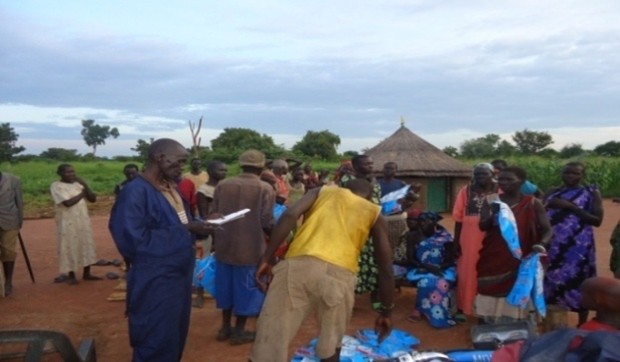

On Monday, the humanitarian community in South Sudan launched the 2025 Humanitarian Needs and Response Plan (HNRP), appealing for $1.7 billion to provide life-saving assistance to the country’s 5.4 million most vulnerable individuals.
In 2025, it is projected that 9.3 million people—approximately 69% of South Sudan's total population of 13.4 million—will require some form of humanitarian aid.
Minister of Humanitarian Affairs and Disaster Management, Albino Akol Atak Mayom, emphasized the need for collaboration between partners to address the urgent humanitarian needs of the 5.4 million affected people. "Collaboration will remain crucial in 2025—not just to provide immediate relief but also to support long-term solutions by investing in basic services and livelihood opportunities to help people move beyond dependence on humanitarian assistance," Akol said during the HNRP’s launch in Juba, the capital.
The Minister also assured the humanitarian community that the government would take steps to ensure the safety of aid workers and facilitate the delivery of humanitarian supplies. "We must protect our workers, their families, and their property. It is vital that aid workers have access to those in need, and we will work to eliminate illegal checkpoints," he added.
Anita Kiki Gbeho, the UN Humanitarian Coordinator for South Sudan, described the dire situation as being caused by a combination of ongoing conflict, extreme weather conditions linked to climate change, disease outbreaks, economic downturns, and the ripple effects of the ongoing conflict in neighboring Sudan.
“The 2025 HNRP offers a comprehensive and realistic plan to address the acute needs of vulnerable populations across South Sudan, with a focus on delivering life-saving assistance,” Gbeho stated.
Since the conflict in Sudan began in April 2023, over 905,000 refugees have crossed into South Sudan, with an additional 337,000 expected in 2025, further straining the country’s humanitarian resources.